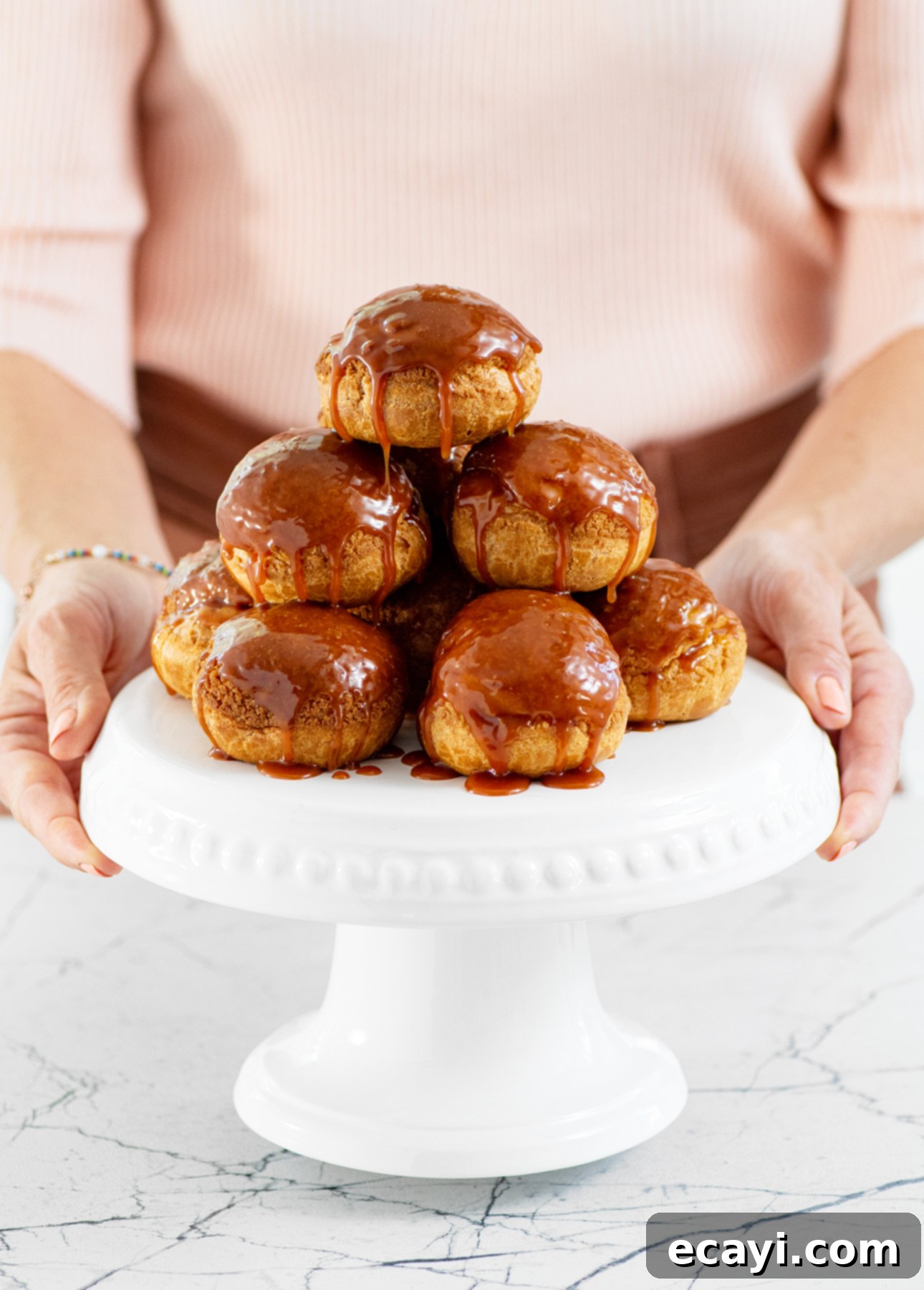
Unforgettable Salted Caramel Cream Puffs: Your Ultimate Guide to Baking Perfection at Home
Embark on a delightful baking journey and transform into a true pastry superstar with these exquisite salted caramel cream puffs. Impress your family and friends, leaving them craving more of these delicate treats. Discover how simple it is to plan ahead and conquer this rewarding baking project!
This post contains affiliate links. Full disclosure is at the bottom of the article.
Few desserts bring as much sheer joy to a food lover as a perfectly crafted cream puff. If you’ve ever had the pleasure of tasting a freshly prepared cream puff, you understand exactly what I mean. It’s an experience that transcends mere eating. The delicate, tiny format, the irresistibly crunchy shell that gives way with a satisfying snap, and the rich, sweet filling that bursts forth, forcing you to savor every last drop from your fingers—these elements combine to create a truly unforgettable dessert. It’s a moment of pure, unadulterated bliss that makes cream puffs stand out from the crowd.
Unfortunately, the magic of a fresh cream puff is often lost in commercial settings. Due to logistical challenges, staffing limitations, and demanding work schedules, the cream puffs found in most pastry shops or restaurants are frequently prepared well in advance and stored for days. This often results in cream puff shells that are inevitably soft, sometimes even a little damp, rather than possessing the crisp, airy crunch they should have. If your only experience with cream puffs has been these pre-made versions, you might not even realize what you’re missing. But for those of us who appreciate the art of pastry, each bite can be a minor disappointment, a shadow of what a cream puff truly can be.
In an ideal culinary world, cream puffs would always be prepared à la minute—that is, assembled only upon receiving an order. This method ensures maximum freshness, preserving the delicate textures and vibrant flavors of each component. While all the individual elements of a cream puff, such as the choux pastry shells and the fillings, can be made ahead of time, the final assembly should ideally happen just moments before serving. I am fortunate to know of one exceptional pastry shop that adheres to this philosophy—and it happens to be my absolute favorite in Québec—Patrice Pâtissier in Montreal. This acclaimed establishment is celebrated for many culinary delights, but their approach to cream puff creation is truly on another level.
At Patrice Pâtissier, you’ll find a single “cream puff of the day” elegantly displayed under a glass dome. Should you order one, you’ll patiently wait for a few moments as a skilled chef meticulously assembles it just for you. Trust me, biting into such a carefully and freshly prepared puff is nothing short of a life-changing culinary moment. The contrast of textures, the temperature, the intensity of flavor—it’s perfection. The bittersweet reality, however, is that most cream puffs you’ll encounter afterward might fall short by comparison! (A delightful first-world problem, I admit.)
View this post on Instagram
A post shared by Patrice Demers (@patrice_demers)
It’s clear that preparing cream puffs to order demands a deep level of dedication and passion for this classic treat, a commitment that many commercial establishments simply cannot maintain or afford. However, I have wonderful news for all aspiring bakers: making cream puffs right in your own kitchen provides the unparalleled pleasure of that freshly prepared perfection, coupled with the immense pride of having created them yourself. This isn’t just about deliciousness; it’s about a rewarding culinary accomplishment.
Even more encouragingly, crafting cream puffs at home, while requiring a dedicated block of time, does not involve frustrating technical pitfalls or overly complicated methods. It’s a surprisingly straightforward process that you can absolutely master, even if you consider yourself a novice baker rather than an experienced pastry chef. The fundamental techniques are accessible, and with clear instructions, success is well within reach. And here’s the most exciting news: once you’ve learned the art of making choux pastry, a world of other delightful desserts and savory treats will open up to you! Imagine effortlessly creating elegant chocolate éclairs, classic French cheese puffs (gougères), and many more beloved French classics, all from scratch. This recipe is your gateway to an expanded baking repertoire.
These Salted Caramel Cream Puffs are, without exaggeration, quite possibly the very best dessert I have ever developed. You don’t just have to take my word for it: every single person who has tasted these bite-sized masterpieces has let out a contented sigh of delight, often followed by a thorough cleaning of their plates to capture every last drop of that utterly addictive salted caramel sauce. And the question that inevitably follows, every single time, is, “Can I please have another one?” They are that good – a truly sensational sweet and savory balance that leaves an indelible impression.
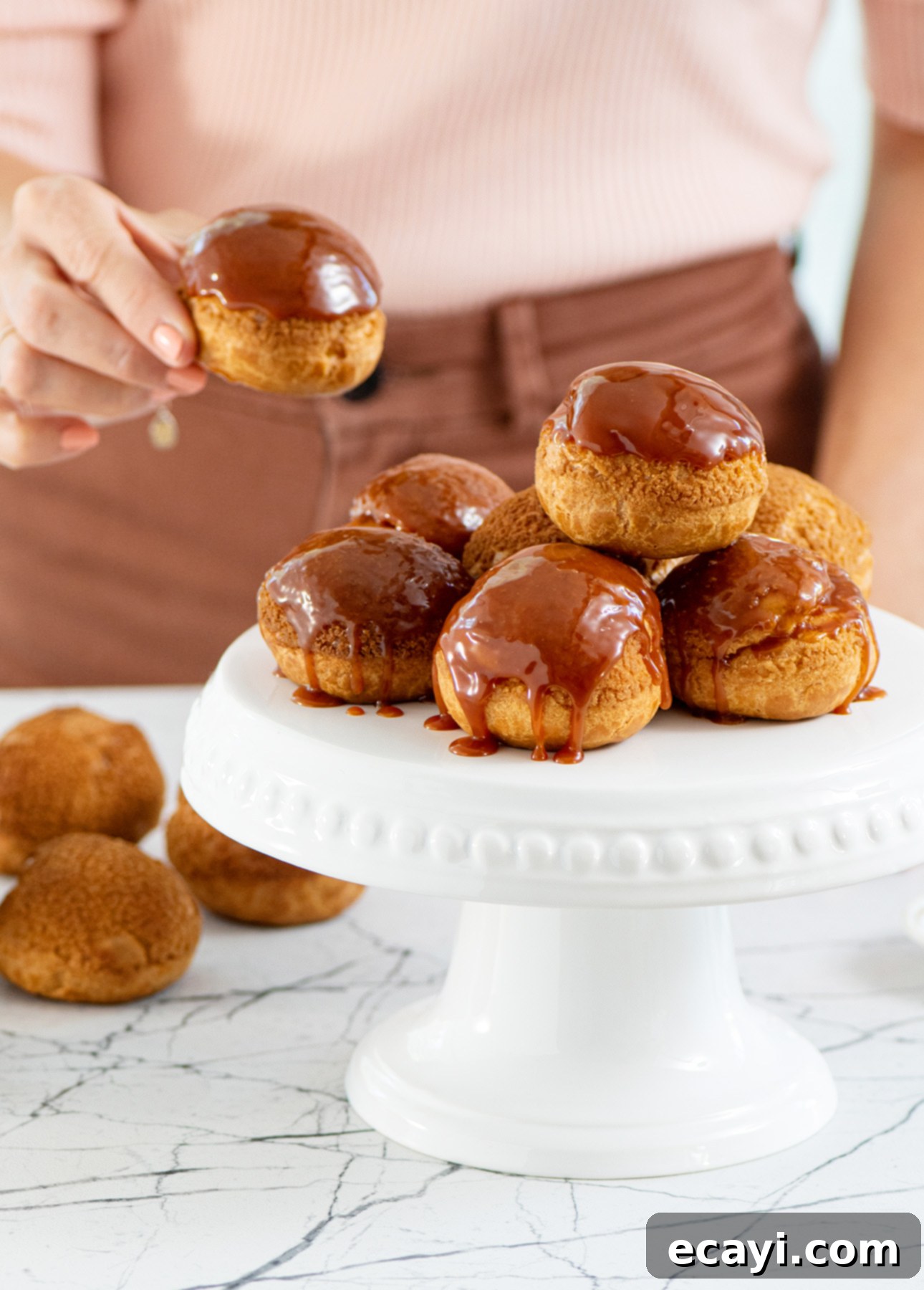
While these decadent cream puffs do involve several distinct components, the good news is that most of them can be prepared well in advance, even over the course of several days. This modular approach allows you to effectively break down the baking process into manageable steps, making the entire project feel significantly less daunting and much more approachable, even for busy schedules. Think of it as a strategic culinary endeavor, where a bit of planning leads to spectacular results. (For a comprehensive guide, be sure to refer to my printable preparation plan provided further down in this article.)
Crafting these extraordinary Salted Caramel Cream Puffs also means you’ll master the art of making salted caramel not once, but twice: first, to create the rich, creamy base for the whipped cream filling, and a second time, to produce that irresistible, glistening, pourable sauce for dipping. Although the prospect of making caramel from scratch might initially seem intimidating, there’s absolutely no need to worry. I’ll guide you through each step with clear, easy-to-follow instructions. You’ll be pleasantly surprised to learn that you don’t even need a candy thermometer to achieve perfect caramel every time!
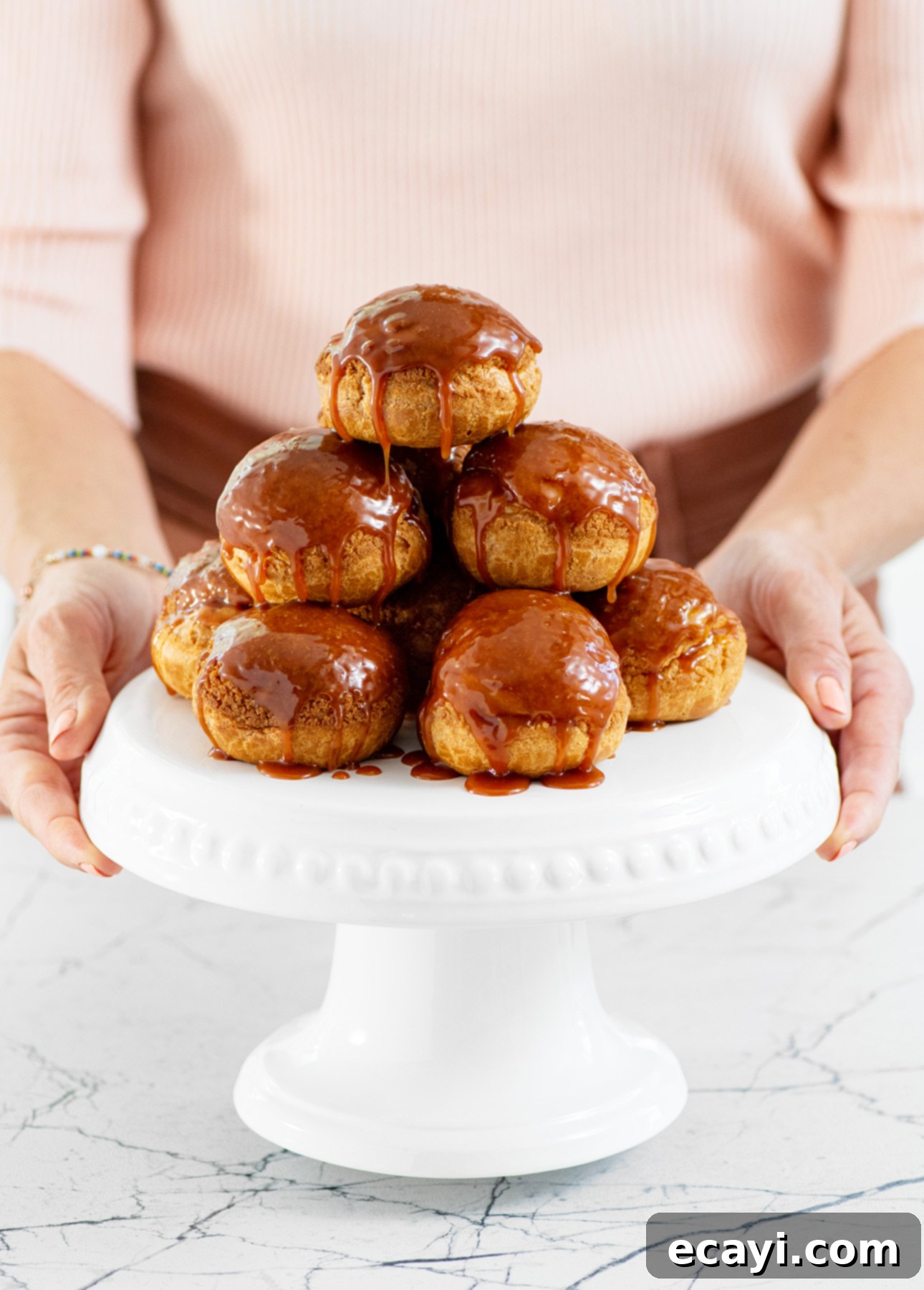
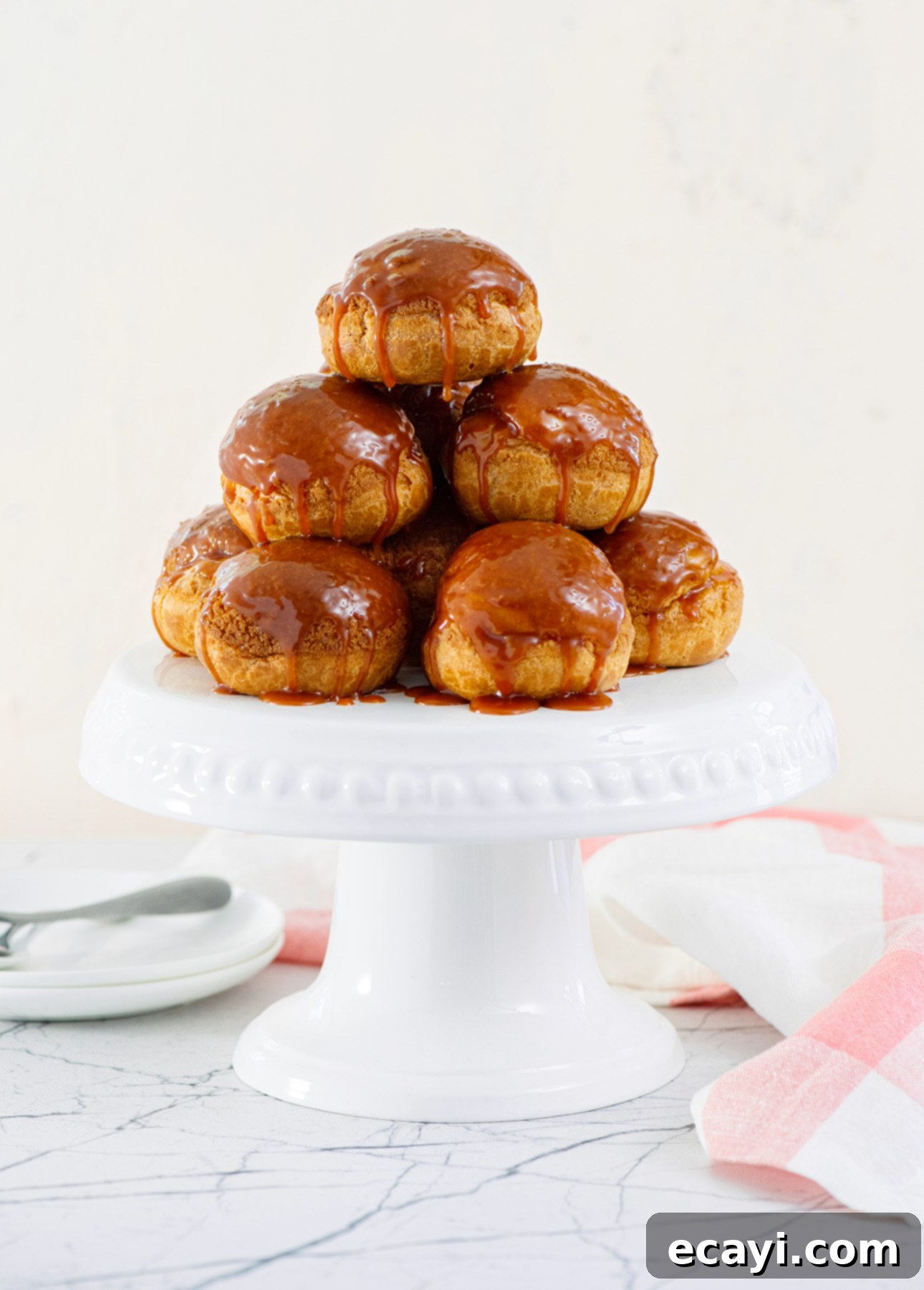
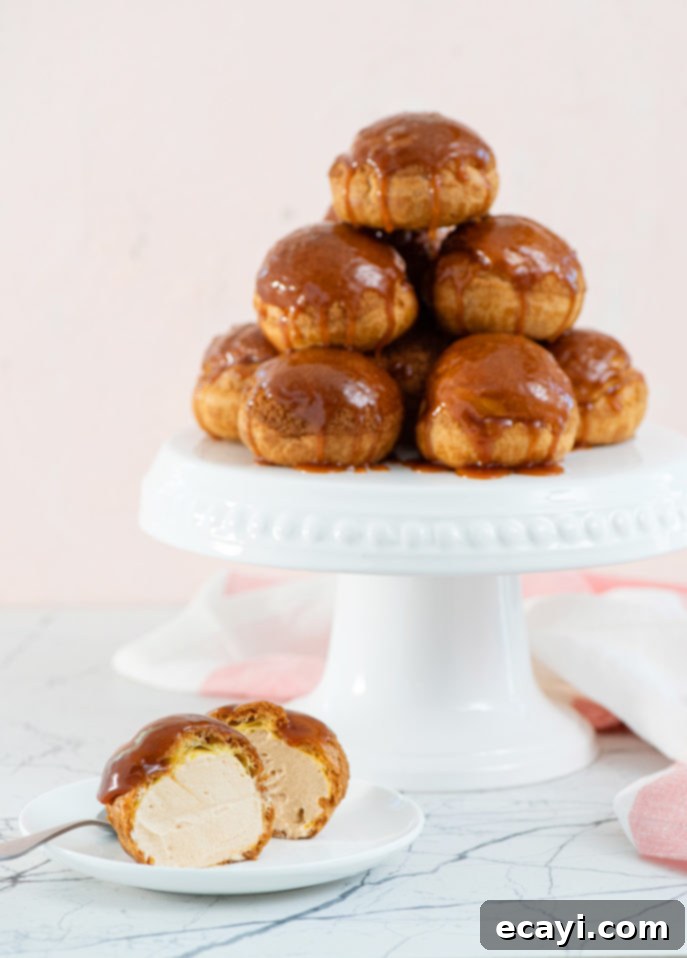
I am confident that these Salted Caramel Cream Puffs have the potential to become the most spectacular dessert you’ve ever created. The presentation possibilities are as impressive as their flavor. You can elegantly arrange them on a beautiful serving plate for a sophisticated touch, or, for a truly show-stopping display, pile them high to form a dramatic, quasi-croquembouche. No matter how you choose to present these magnificent cream puffs, they are absolutely guaranteed to create a memorable impression and earn you endless compliments!
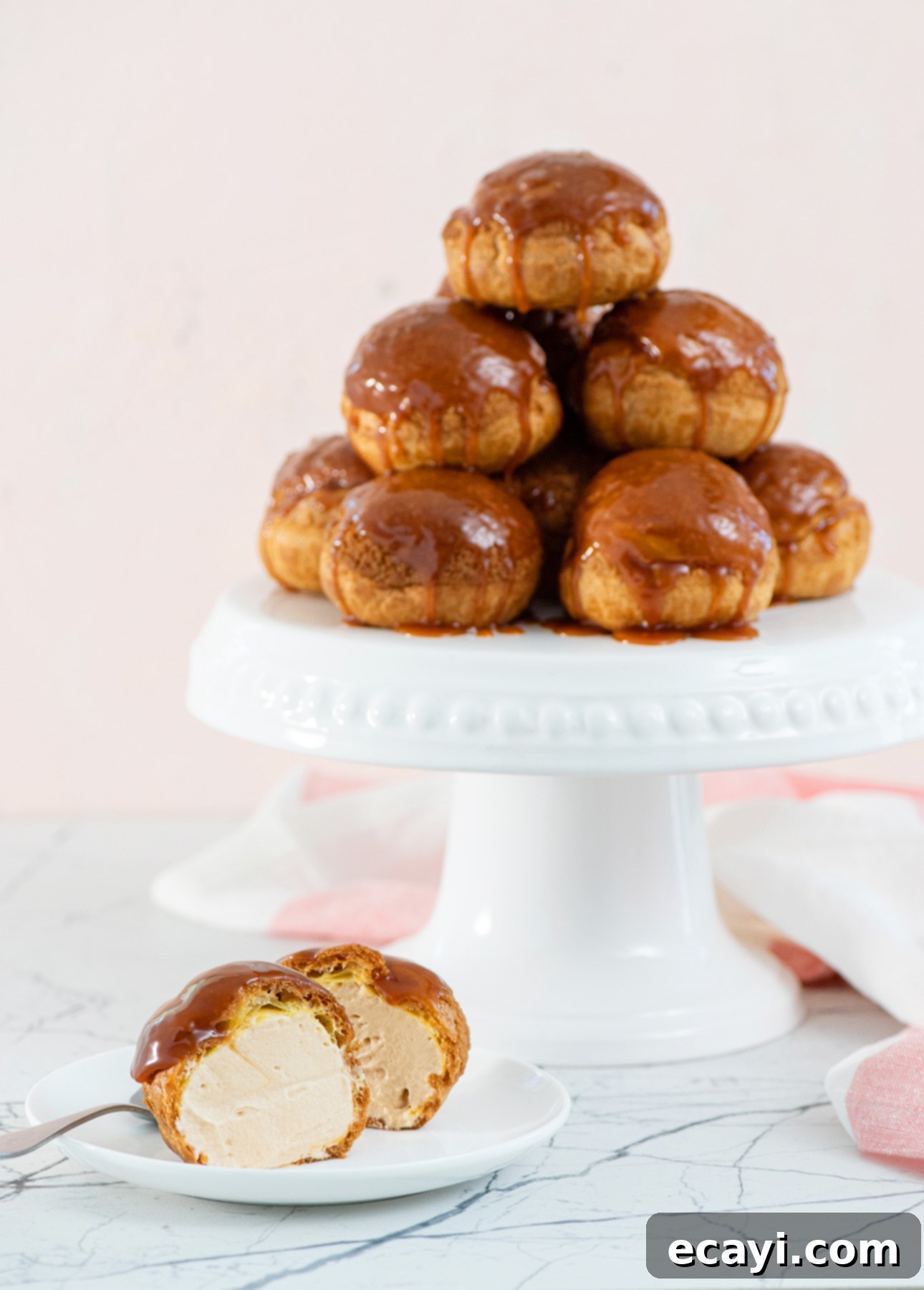
I’ve never made caramel from scratch! Is it stressful or difficult? Can I mess it up?
Making caramel from scratch is a culinary skill that often intimidates home cooks, but it’s far more approachable than many believe. The most crucial, and often perceived as the biggest, pressure point when making caramel is precisely knowing when to remove it from the heat. Caramelization is a rapid process: cook the sugar for just a few seconds too long, and you risk burning it, which results in a bitter, unusable product. However, there’s excellent news for beginners: caramelizing the sugar is typically the very first step in most caramel recipes. This means that if you happen to make a mistake and burn it, you can simply start over without having wasted any other precious ingredients. It’s a low-risk, high-reward technique.
With a little practice and keen observation, you’ll quickly develop an intuitive sense for when your caramel is perfectly ready. As sugar caramelizes, its flavor profile deepens significantly, transforming from simple sweetness to a complex, rich, and slightly savory taste – this complexity is what makes caramel so utterly irresistible. This specific recipe for Salted Caramel Cream Puffs utilizes a “dry caramel” method, which involves cooking granulated sugar without the addition of any other liquid. This technique requires constant attention and continuous whisking to ensure even melting and prevent hot spots, which is absolutely key to achieving caramel success. Stay focused, and you’ll do great!
A vital tip for perfect caramel is to always pull it off the heat a few seconds before you think it’s fully ready. This is because residual heat in the saucepan will continue the caramelization process, causing the caramel to deepen in color and flavor even after it’s removed from the burner. When you whisk in the heavy cream, it instantly halts this process, locking in that perfect amber hue and exquisite taste.
Especially if this is your first time making caramel, it’s advisable to remove the sugar from the heat when it reaches a color similar to light maple syrup or golden corn syrup. Erring on the side of caution and pulling the sugar off too early is always better than waiting too long. The worst outcome of removing it prematurely is that your caramel will have a slightly milder flavor, which is still delicious. As you gain experience and confidence, you’ll learn to push the boundaries, daring to keep the caramel on the heat for those crucial extra seconds. This precision will allow you to achieve that savory edge and create a truly life-changing caramel that you’ll become utterly addicted to, elevating your baking to new heights.
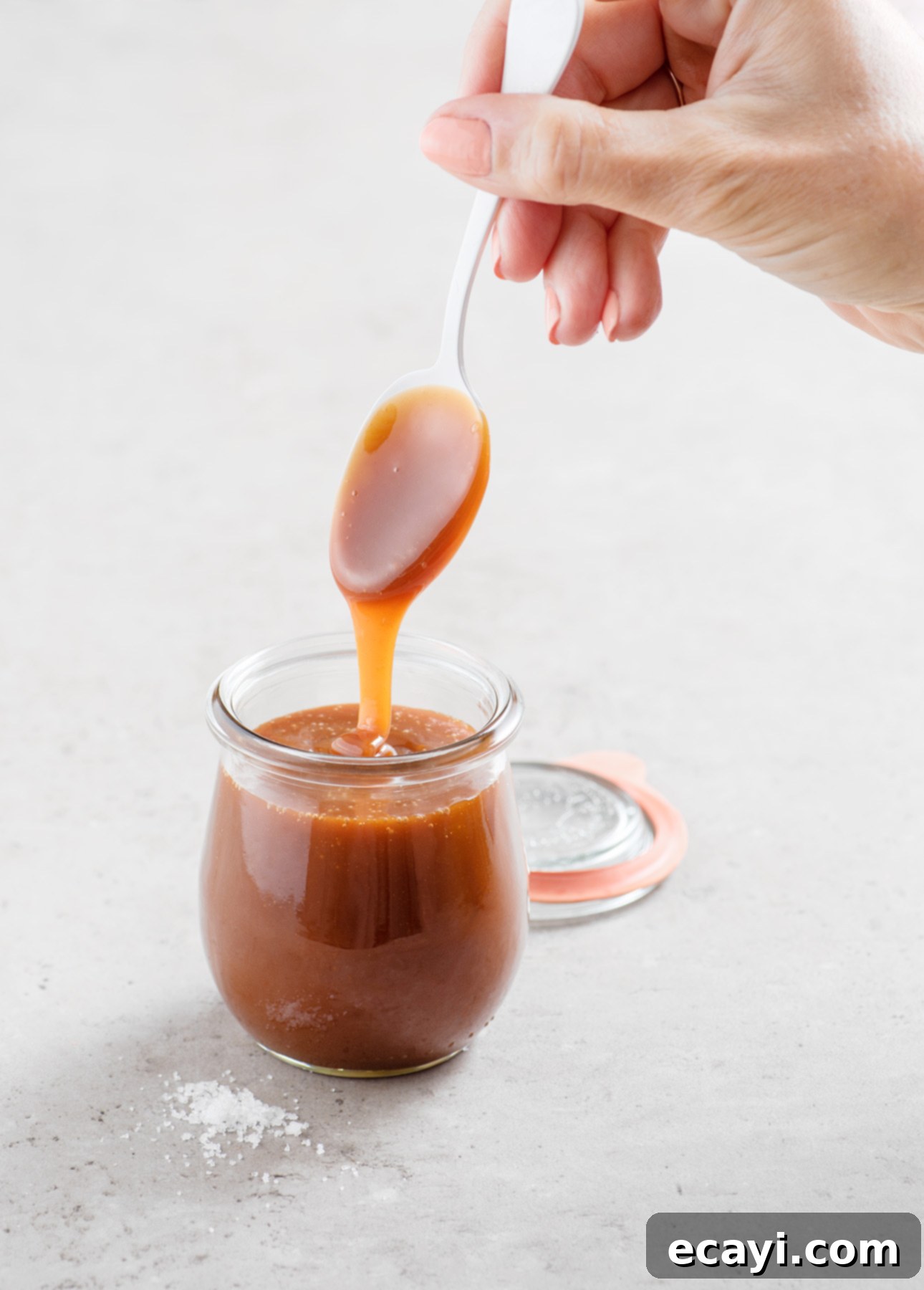
Do I need a candy thermometer to make salted caramel sauce?
Absolutely not! While some caramel recipes might suggest using a candy thermometer for precise temperature control, you do not need one for either the salted caramel cream filling or the luscious salted caramel sauce in this specific cream puff recipe. We will rely on visual cues and timing, which are perfectly sufficient for achieving delicious results. Follow the detailed, step-by-step instructions provided in the recipe below to confidently prepare perfect salted caramel sauce without needing any specialized equipment.
Why is gelatin added to the salted caramel whipped cream filling?
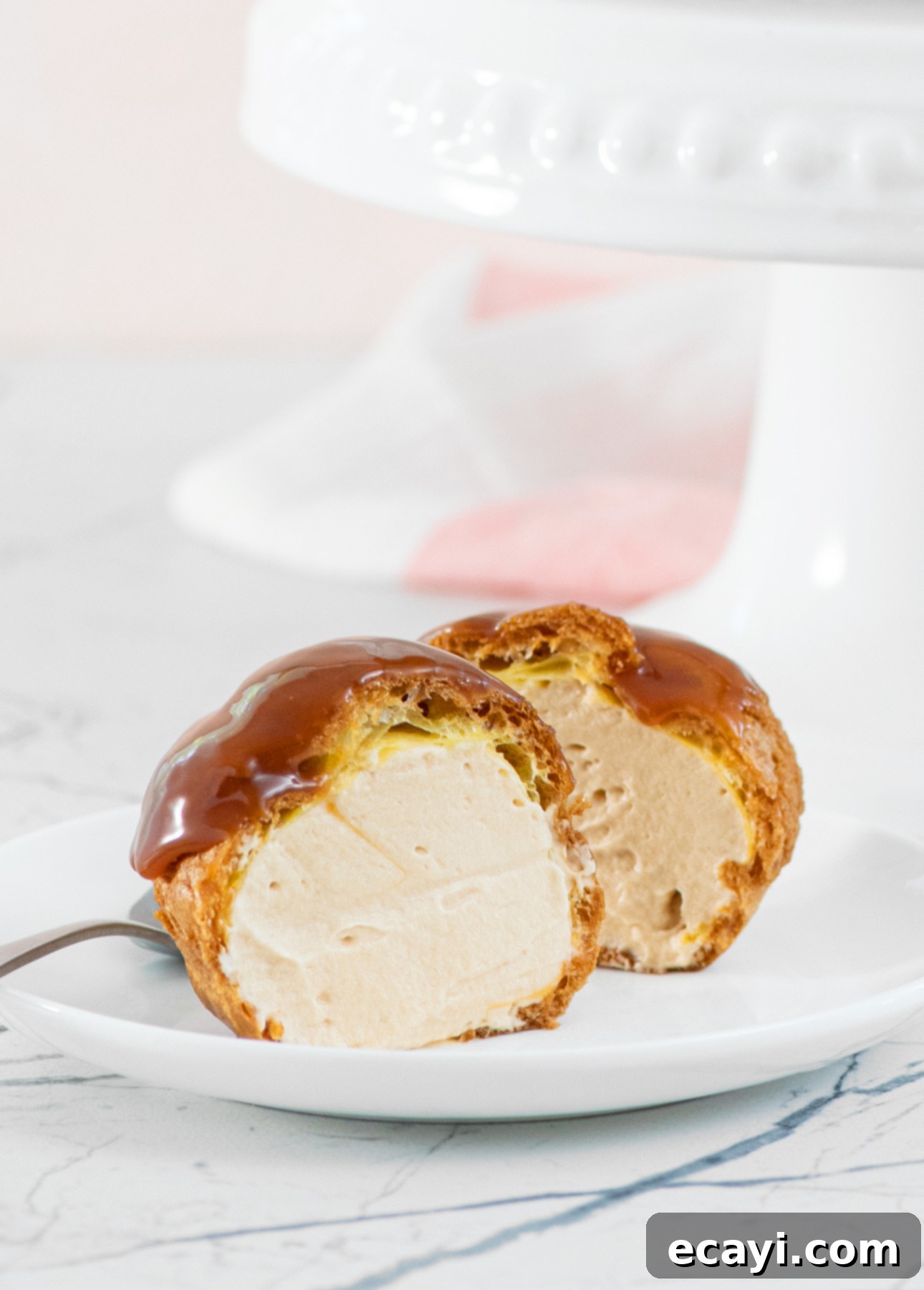
The inclusion of gelatin in our whipped cream recipe is a clever pastry technique that creates what is known as stabilized whipped cream. In simple terms, this means your whipped cream will maintain its beautiful, firm, and fluffy texture for an extended period, typically up to 24 hours. Without gelatin, whipped cream can start to deflate and “weep,” releasing liquid that can make your delicate cream puff shells soggy and compromise their desirable crunch. Stabilizing the whipped cream with gelatin prevents this unwanted weeping, ensuring your precious cream puffs remain pristine and delicious from the first bite to the last, even if assembled a few hours in advance.
Making stabilized whipped cream is surprisingly simple and requires minimal effort. All you need to do is gently melt a small amount of powdered gelatin into a bit of water, creating a blooming gelatin mixture. This is then smoothly incorporated into the salted caramel cream mixture before you whip it. The gelatin works its magic as the cream chills, creating a stable network that holds the air bubbles in place once whipped. Refer to the comprehensive recipe instructions below for a detailed, easy-to-follow guide on how to prepare this perfectly stabilized filling.
Can I omit gelatin from the salted caramel whipped cream filling?
Yes, you can absolutely choose to omit the gelatin from the salted caramel whipped cream filling under specific circumstances. If your plan is to assemble the cream puffs and serve them within a short timeframe, generally within 2 hours of filling, then the gelatin is not strictly necessary. In such a brief period, the salted caramel whipped cream will not have sufficient time to lose its texture or begin to “weep,” meaning it will remain delightfully firm and fluffy. However, for any advance preparation or if you anticipate a longer serving window, using gelatin is highly recommended to ensure your cream puffs maintain their optimal quality and presentation.
What is choux craquelin, and why is it useful?
Choux craquelin, often referred to simply as “craquelin,” is a delightful addition to classic choux pastry. It’s essentially a very simple, cookie-like dough composed of just three basic ingredients: butter, brown sugar, and flour. This dough is rolled out thinly and then cut into small rounds. These rounds are then carefully placed on top of the piped choux pastry mounds just before they are baked.
Functionally, craquelin serves a dual purpose: it helps create cream puffs that are beautifully round, more uniformly shaped, and incredibly crispy. The magic lies in how it behaves during baking. As the cream puffs expand in the hot oven, the butter within the craquelin mixture melts and effectively “fries” the surface of the choux pastry. This creates a wonderfully delicate, sugary crust that not only adds an extra layer of crunch and flavor but also controls and directs the expansion of the puff. The result is consistently spherical cream puffs with a gorgeous, crackled top, offering a perfect aesthetic and textural contrast.
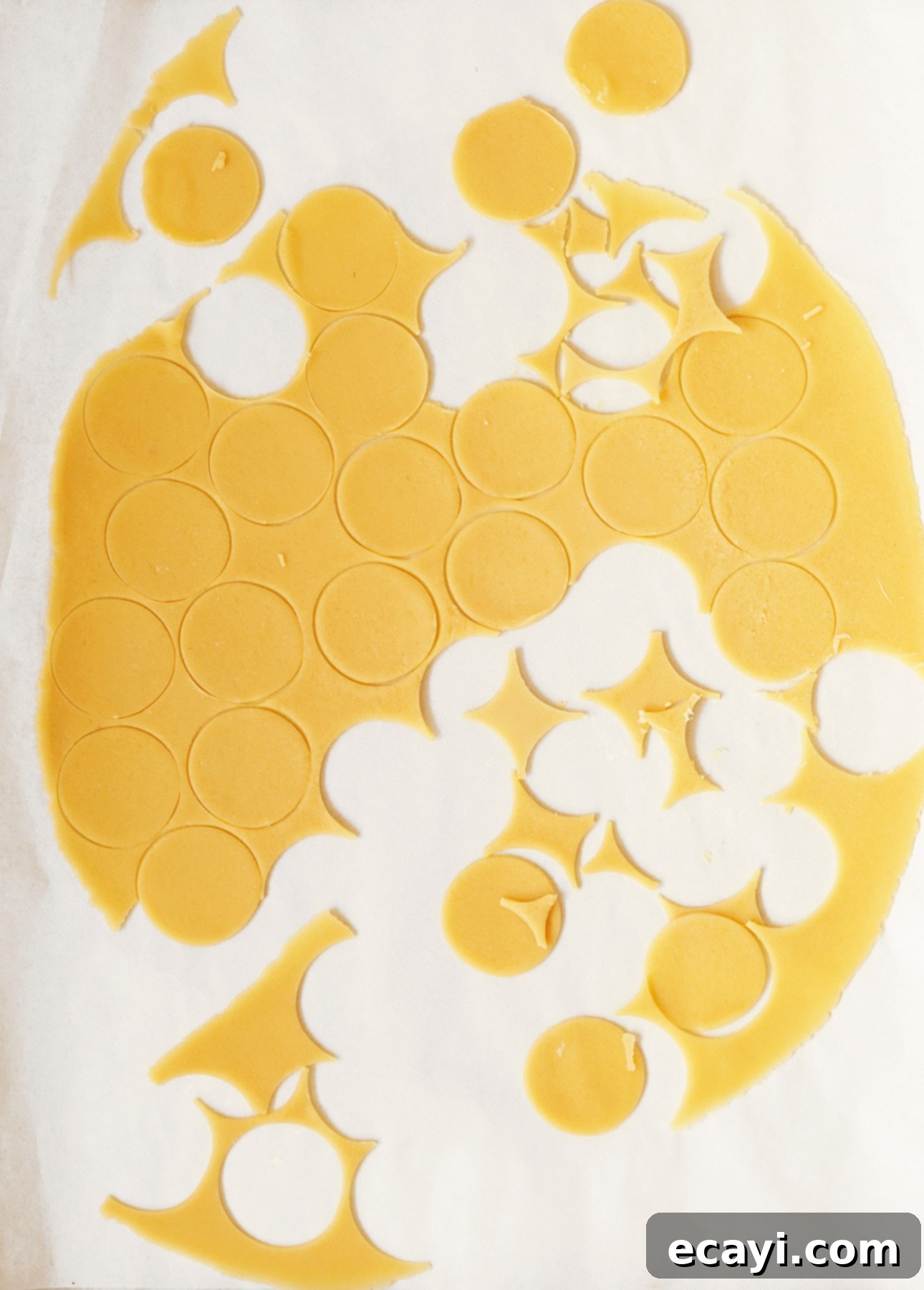
Do I really need to use craquelin to make these salted caramel cream puffs?
While craquelin undoubtedly elevates the visual appeal and textural complexity of cream puffs, the short answer is no, you don’t strictly need to use it. Although making craquelin is not particularly difficult—it’s a straightforward mixture of butter, sugar, and flour—it is considered a “next-level” technique. If this is your very first time venturing into making cream puffs, or if you’re not concerned about achieving perfectly uniform, picture-perfect results, then feel free to skip this step. Your cream puffs will still be absolutely delicious, with a wonderful airy texture and crisp exterior, even if they possess a charmingly “perfectly imperfect” rustic shape. The core components of choux pastry and salted caramel filling are what truly make these treats shine.
Why must choux craquelin be frozen?
Freezing choux craquelin is a crucial step that ensures both ease of handling and optimal results during baking. Quite simply, at room temperature, craquelin dough is exceedingly soft and sticky, making it very challenging to roll out thinly and cut into neat rounds without it tearing or losing its shape. Freezing it solidifies the butter, making the dough firm and much easier to manipulate, allowing for clean cuts and effortless transfer onto the choux pastry.
Beyond ease of handling, freezing craquelin also plays a vital role in its performance during baking. The frozen craquelin melts more slowly in the hot oven. This controlled melting process allows the choux pastry underneath to fully puff up and develop its characteristic hollow interior and airy structure before the craquelin spreads and adheres. This perfect timing ensures that the cream puff reaches its most beautiful potential, with a gorgeous, crisp, crackled top.
What size should cream puffs be?
The beauty of homemade cream puffs is their versatility; they can fundamentally be made in any size you desire, adapting to your preferences or the occasion. The Salted Caramel Cream Puffs in this recipe are designed to be generously sized, providing a satisfying treat that typically requires 2 to 3 wonderfully (and deliciously) messy bites to enjoy fully. This size makes them substantial enough for a delightful dessert portion.
However, you can certainly opt to create smaller, more delicate, one-bite cream puffs, which are perfect for a dessert buffet or as elegant petit fours. If you choose to make them smaller, remember this important adjustment: you will need to decrease the baking time accordingly. Smaller puffs will cook faster, so keep a watchful eye on them to prevent over-baking and ensure they maintain their light, airy texture.
How to portion cream puffs more quickly (and create uniformly sized cream puffs)
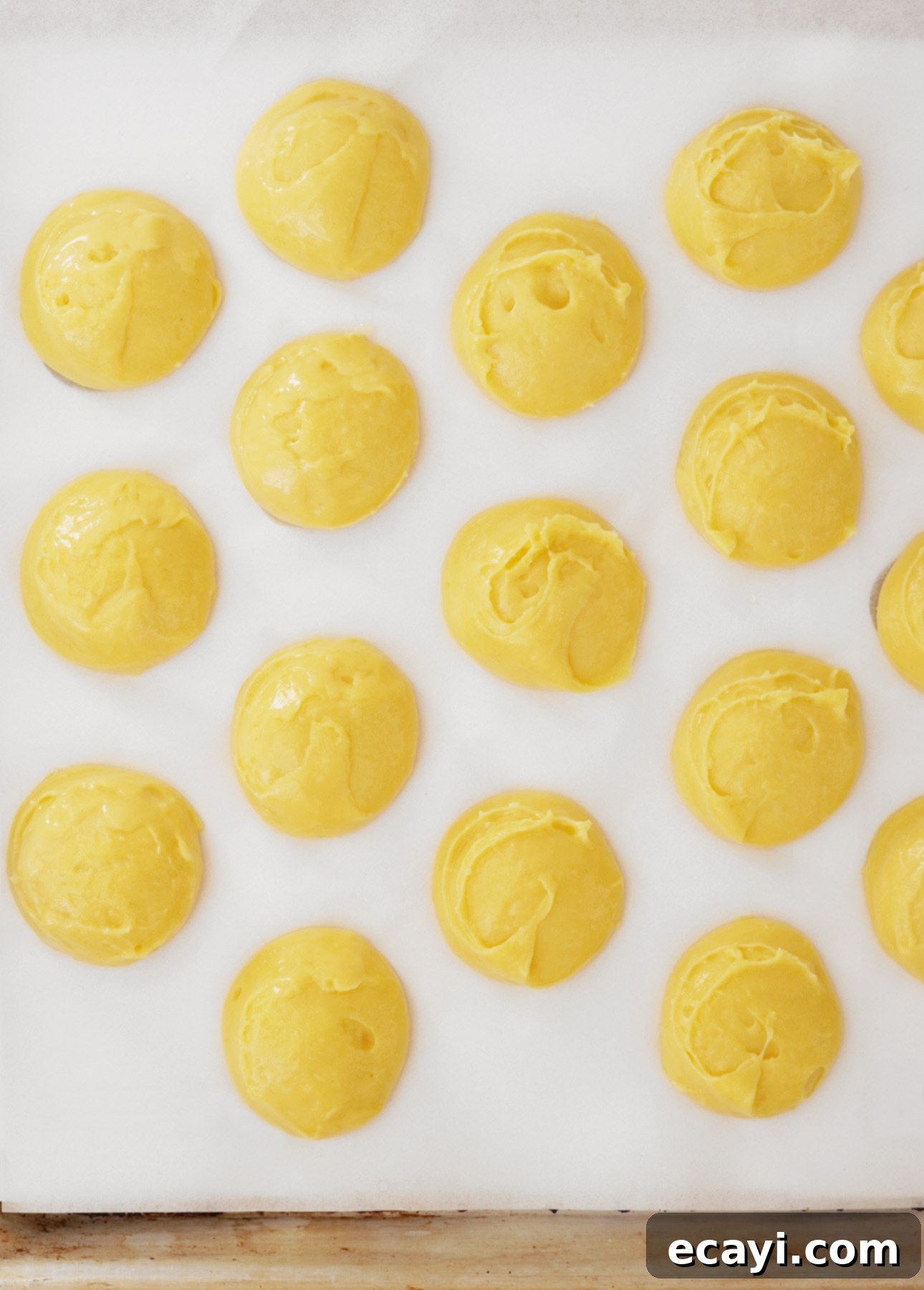
Achieving consistently sized cream puffs not only makes for a more professional-looking presentation but also ensures even baking. My absolute favorite hack for quickly creating perfectly sized and uniform cream puffs is to utilize a cookie scoop. This indispensable kitchen tool allows you to effortlessly control the precise amount of choux pastry dough you dispense, making the process incredibly fast and efficient. With each scoop, you’ll produce mounds of dough that are almost identical in size and shape, taking the guesswork out of portioning and guaranteeing a beautiful batch of pastries.
For this specific Salted Caramel Cream Puffs recipe, a ¾ oz (which is equivalent to 1 ½ tablespoon) cookie scoop is recommended. This size yields the ideal portion for our generously sized puffs, striking a perfect balance between a satisfying bite and elegant presentation. Investing in a good quality cookie scoop will streamline your choux pastry making and enhance the overall consistency of your baked goods.
How to know when cream puffs are baked through
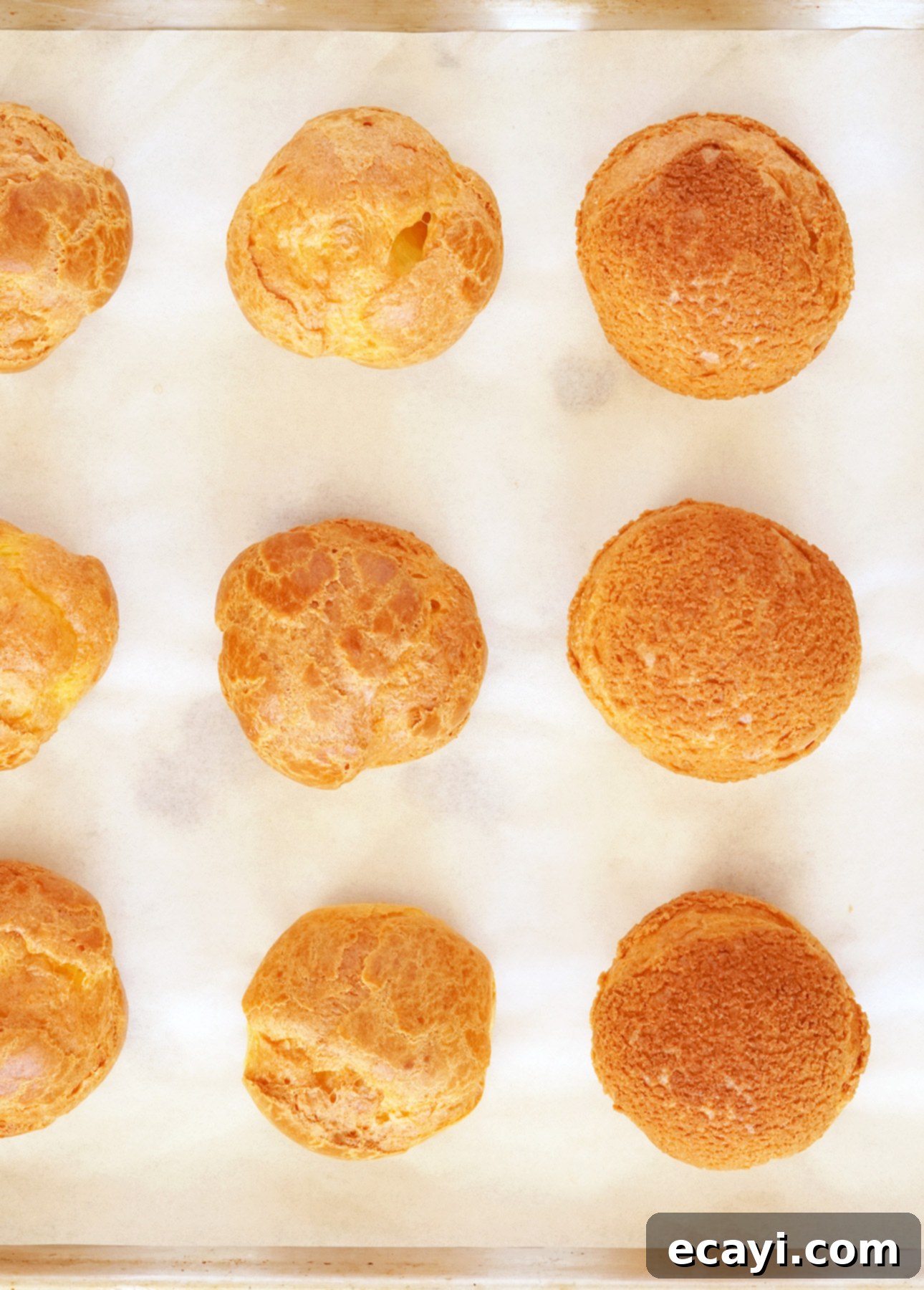
Properly baking choux pastry is absolutely critical for creating light, airy cream puffs that hold their shape. The most common mistake is underbaking, which leads to soggy, collapsed puffs. You’ll know that your cream puffs are thoroughly baked and ready to be removed from the oven when they have achieved a beautiful, dark golden brown color all around—and this includes down to the very bottom of the puff. This often takes a bit longer than you might initially anticipate, so patience is key.
It’s easy to be deceived: cream puffs can look perfectly puffed and golden on top after just 20-25 minutes of baking. However, if the base of the puff is still light blonde or pale when you take them out of the oven, they haven’t finished baking through. The internal moisture hasn’t fully evaporated, and the structure hasn’t completely set. Consequently, these underbaked puffs will almost certainly collapse and deflate as they cool, losing their beautiful round shape and desirable crispness. Always check the bottom of the puffs to ensure they are as deeply colored as the tops for guaranteed success and a stable, crunchy shell.
Can cream puffs be made in advance?
Strategic advance preparation is a baker’s best friend, especially when it comes to multi-component desserts like cream puffs. For optimal enjoyment, cream puffs that have been filled with salted caramel whipped cream and dipped into the luscious salted caramel sauce should ideally be enjoyed within an hour or two of assembly. Beyond this timeframe, the delicate cream puff shell will gradually begin to absorb moisture from the filling and the sauce, slowly but surely losing that irresistible contrast between its crispy exterior and the creamy, soft center. This is the hallmark of a freshly prepared cream puff, and you want to preserve that magic.
However, this doesn’t mean the entire project needs to be a last-minute scramble! Quite the contrary, most of the individual cream puff components can be expertly prepared in advance, significantly reducing stress on the day of serving. The choux pastry shells themselves can even be baked and frozen for future use! This smart approach allows you to spread the work over several days or weeks, making the entire project much more manageable and approachable. It also alleviates performance pressure: if one component doesn’t turn out exactly as planned, you won’t feel like you’ve ruined tonight’s dessert. You can simply regroup and get everything perfect before your special event.
Can cream puffs be frozen?
Yes, absolutely! Both craquelin dough and baked cream puff shells are excellent candidates for freezing, making this recipe incredibly convenient for advance preparation. This flexibility allows you to tackle different stages of the baking process whenever you have spare time.
Preparing craquelin in advance is a fantastic time-saving strategy. Once you’ve rolled out and cut your craquelin rounds, they can be kept frozen for up to 1 month. Simply arrange them on a parchment-lined tray, freeze until solid, then transfer to an airtight container, separating layers with parchment paper to prevent sticking. (Refer to the detailed recipe below for specific freezing tips.)
The baked cream puff shells can also be frozen with great success for up to 1 month. After baking the shells as indicated in the recipe, allow them to cool completely to room temperature. Once cooled, arrange all the cream puff shells in a single layer on a baking sheet. Place the entire baking sheet into the freezer for at least 3 hours, or preferably overnight, until the shells are completely frozen solid.
Once the shells are rock hard, carefully transfer them to an airtight container. It’s important to handle frozen shells with care as they are quite fragile and can break easily. You can store these frozen cream puff shells for up to 1 month, ready for whenever you desire a batch of fresh-tasting cream puffs.
How to return frozen cream puff shells to their freshly baked glory
If you’ve frozen your baked cream puff shells, you’ll find that once thawed, they can become a bit soft and lose their initial crispness—a little sad, even. But fear not! There’s a simple and effective trick to fully restore them to their freshly baked flavor and wonderfully crisp texture. This reheating process is a game-changer for make-ahead baking.
To revive your thawed cream puff shells, begin by preheating your oven to 325°F (160°C). Arrange the thawed cream puff shells evenly on a baking sheet. Place them in the preheated oven and bake for precisely 7 minutes. This short burst of heat works wonders, driving out any absorbed moisture and re-crisping the pastry. After baking, immediately transfer the warm shells to a wire rack and allow them to cool completely to room temperature. As they cool, you’ll notice them regaining their characteristic crispness and delicate structure, just as they were when freshly baked. Once fully cooled, you can confidently proceed with filling the cream puffs as directed in the recipe below, enjoying them as if they just came out of the oven for the first time.
Preparation plan for making Salted Caramel Cream Puffs
To make the process of creating these spectacular Salted Caramel Cream Puffs as smooth and enjoyable as possible, I’ve put together a flexible preparation plan. This schedule allows you to spread the work out over several days or even weeks, transforming a potentially intimidating baking project into a series of achievable steps. Feel free to adapt this plan to fit your own schedule and preferences!
SAVE A PDF COPY / PRINT THIS PREP PLAN
Up to 1 month in advance:
- Prepare the choux craquelin dough, roll it out, cut the rounds, and freeze them.
- You can also bake the cream puff shells following the recipe and then freeze them for up to 1 month. Refer to the detailed freezing tips provided in the recipe for best results.
Up to 2 days in advance:
- Make the salted caramel cream base for the filling. It’s crucial for this cream to be thoroughly chilled before whipping to achieve the proper texture.
- Prepare the salted caramel sauce and refrigerate it. This sauce can be easily reheated and loosened just before serving.
Morning of serving:
- Make the choux pastry dough.
- Bake the cream puffs, ensuring they are golden brown and cooked through, then let them cool completely to room temperature.
- Whip the chilled salted caramel cream filling to firm peaks and return it to the refrigerator until assembly.
Up to 4 hours before serving:
- Fill the cooled cream puffs with the freshly whipped salted caramel cream filling. Refrigerate them, uncovered, to maintain their crispness.
- Bring the salted caramel sauce out of the refrigerator to allow it to come back to room temperature, which will make it easier to reheat and dip.
Up to 1 hour before serving:
- Gently reheat the salted caramel sauce for a few seconds in the microwave or in a saucepan over low heat, just until it becomes slightly loosened and pourable. Transfer it to a small bowl for dipping.
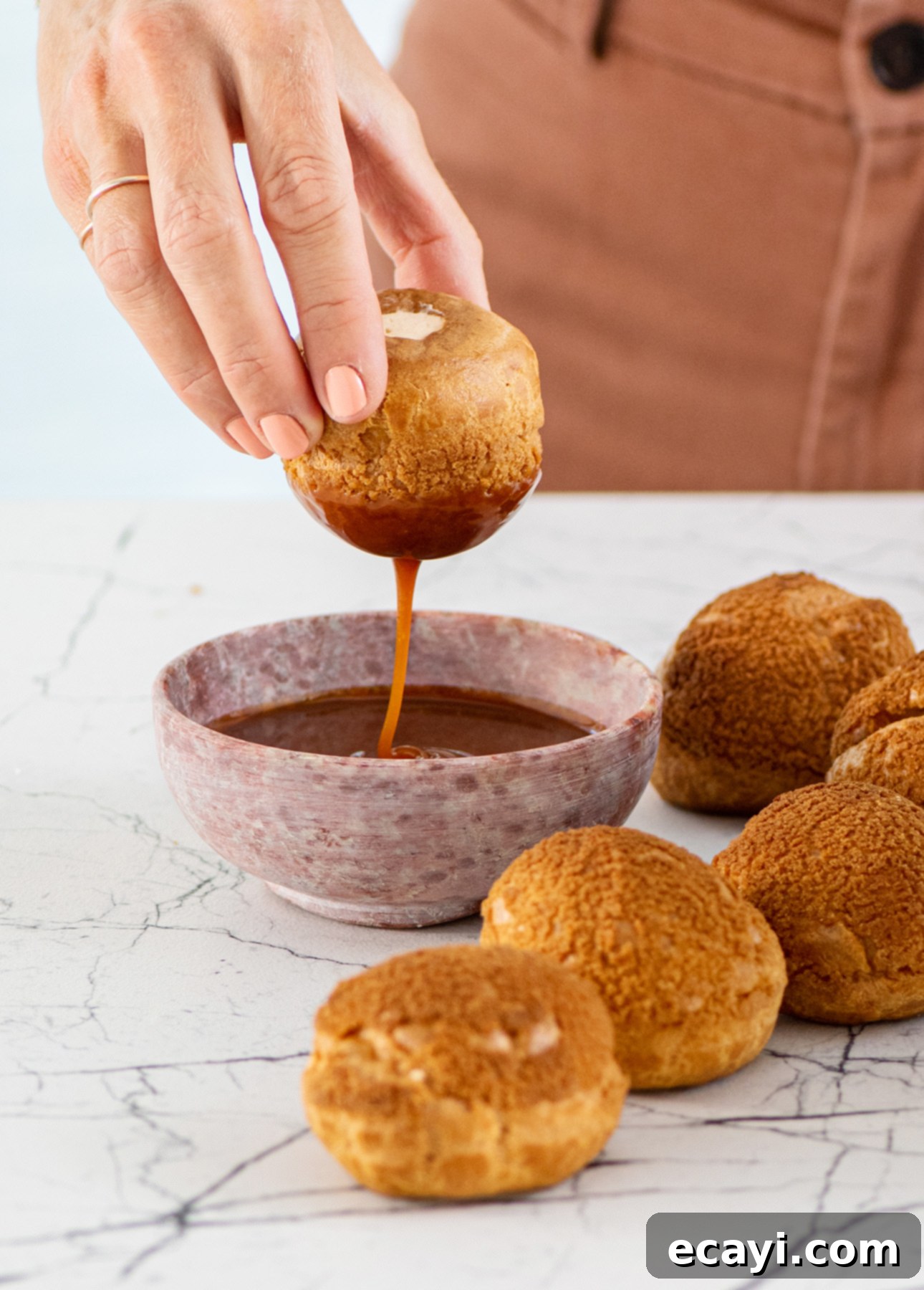
- Take each filled cream puff, turn it upside down, and dip its top into the warm salted caramel sauce. Allow any excess sauce to drip off briefly before placing it on your serving plate.
- Transfer the beautifully dipped cream puffs to a cool spot and keep them at room temperature until it’s time to serve.
- ENJOY the fruits of your labor!
Choux Pastry Video Class

Have you never tried making pâte à choux before? Do you want to truly master this versatile and fundamental pastry dough? In my comprehensive and detailed video class, you will not only learn the precise techniques for making perfect pâte à choux from scratch, but you’ll also discover the incredible range of treats you can create from this one miraculous dough. We’ll explore how to transform it into delightful chouquettes, classic cream puffs, elegant profiteroles, sophisticated éclairs, and savory gougères (French cheese puffs). Throughout the class, I’ll share invaluable tips and tricks to ensure your success on your very first attempt, and demonstrate numerous exciting variation ideas. My engaging and fun class is designed to quickly empower you to master a new skill, enabling you to confidently create impressive puffed treats that will amaze everyone. Watch now and start your choux pastry journey!
Check out the class trailer for a sneak peek into the exciting techniques and delicious recipes you’ll learn in the class:
Watch the class now!
Pin Recipe
RECIPE: Salted Caramel Cream Puffs
Ingredients
For the salted caramel whipped cream filling
- 2 tbsp water
- 1 tsp powdered gelatin
- 2 cups heavy cream (35% m.f.)
- 1 cup granulated sugar
- ½ tsp fleur de sel, or fine sea salt
For the salted caramel sauce
- ½ cup heavy cream (35% m.f.)
- 1 cup granulated sugar
- ½ tsp fleur de sel, or fine sea salt
For the choux craquelin
- ¼ cup butter, room temperature
- ¼ cup brown sugar
- ½ cup all-purpose flour
For the choux pastry
- ½ cup milk
- ½ cup water
- ½ cup unsalted butter (1 stick), cut into cubes
- ½ tsp kosher salt, or fine sea salt
- 1 cup all-purpose flour
- 4 large eggs
Instructions
-
For the salted caramel whipped cream filling: Pour the water in a small bowl. Sprinkle the gelatin over the water, do not stir but leave to rest while you prepare the caramel.
-
In the microwave or in a saucepan, warm the cream without boiling. Keep close to the stove where you’ll be preparing the caramel.
-
In a medium saucepan, add the sugar. Place over medium-high heat and stay close: you need to keep an eye on the sugar melting. After 3 minutes, use a whisk to poke around and see how far along the sugar is. When you feel like the bottom of the sugar is loose and liquid, start whisking. The sugar will first get into clumps, but these will melt as the sugar heats up.
As you whisk, the sugar will fully melt then turn amber as it caramelizes. When the sugar is about the color of maple syrup, take it off the heat, and immediately whisk in about ½ cup of the warm cream into the caramel. Keep your head back and hold your hand high on the whisk while you do because the caramel will produce hot steam. Slowly whisk in the remaining cream, then whisk in the gelatin mixture and the salt.
-
Strain the caramel cream into a large cup or a bowl and leave to cool to room temperature. Cover and refrigerate for at least 6 hours, or ideally overnight. (The caramel cream needs to be very cold before whipping.) You can prepare the caramel cream up to 2 days in advance, but you will only whip it a few hours before using.
-
For the salted caramel sauce: The process to make the salted caramel sauce is very similar to that of the salted caramel whipped cream filling.
-
In the microwave or in a saucepan, warm the cream without boiling. Keep close to the stove where you’ll be preparing the caramel.
-
In a medium saucepan, add the sugar. Place over medium-high heat and stay close: you need keep an eye on the sugar melting. After 3 minutes, use a whisk to poke around and see how far along the sugar is. When you feel like the bottom of the sugar is loose and liquid, start whisking. The sugar will first get into clumps, but these will melt as the sugar heats up.
As you whisk, the sugar will fully melt then turn amber as it caramelizes. When the sugar is about the color of maple syrup, take it off the heat, and immediately whisk in about half of the warm cream into the caramel. Keep your head back and hold your hand high on the whisk while you do because the caramel will produce hot steam. Slowly whisk in the remaining cream, then whisk in the salt.
-
Strain the salted caramel sauce into a glass jar and leave to cool to room temperature. Refrigerate for at least 3 hours. You can make the salted caramel sauce up to 2 days in advance; keep refrigerated until needed.
-
For the choux craquelin: In a bowl, beat together the soft butter and brown sugar until fully incorporated. Add the flour and beat just to incorporate. The craquelin dough should have a sticky Play-Doh texture.
-
Bring the craquelin dough together into a rough ball. Set over a sheet of parchment paper. Cover with a second sheet of parchment paper. Roughly flatten the dough using the palm of your hand, then use a rolling pin to roll out to a ⅛-in (3 mm) thickness.
-
Peel the top sheet of parchment paper off, then use a 1½-in (4 cm) round cookie cutter to indent rounds into the dough (do not try to lift the craquelin rounds at this point.) Transfer the sheet of craquelin dough into the freezer and freeze for at least 1 hour, or up to 2 days.
-
Time saving tip: Once the craquelin dough is frozen hard, you can lift the frozen craquelin rounds (use the cookie cutter to fully detach the rounds, if needed) and store them in an airtight container. Separate each layer of craquelin rounds with parchment paper to avoid sticking. The craquelin dough warm up and softens very quickly at room temperature, so you might need to return the dough to the freezer a few times to lift all craquelin rounds. Discard the scraps. Keep the craquelin rounds frozen until needed.
-
For the choux pastry: In a medium saucepan, combine the milk, water, butter, and salt. Bring to a boil over medium heat. When the mixture is boiling, add the flour all at once and stir vigorously with a wooden spoon until the mixture pulls away from the sides of the pan. Keep cooking and stirring the mixture over medium heat for about 1 minute to eliminate excess moisture. If you used a stainless-steel saucepan, a thin layer of dough may stick to the bottom and sides of the pan; this is normal. Take off the heat.
-
Transfer the dough to the bowl of a stand mixer, or to a large mixing bowl if using a hand mixer, and let cool for 5 minutes, stirring occasionally to allow some of the steam to come out.
-
Set the mixer to medium speed, and beat the eggs in one at a time, making sure each egg is well incorporated before adding the next. Scrape down the bowl down between each addition. Every time you add an egg, the dough will separate and look curdled, but it will then come back together in a super sticky, crumbly way. The dough will keep on getting smoother as you add more eggs. The dough is done when it is very thick and stick, but also smooth and elastic.
-
Choux pastry can be covered and refrigerated for up to 6 hours (half a day.) You do not need to bring choux pastry back to room temperature before baking.
-
To shape the cream puffs: Line a baking sheet with parchment paper.
-
If using a cookie scoop to shape the cream puffs: Fill a ¾ oz (1 ½ tbsp) cookie scoop scant with choux pastry, then wipe excess pastry off the sides of scoop (this will create cleaner mounds of dough.) Drop the ball of choux pastry on the prepared baking sheet. Repeat these steps, setting the puffs 3 inches (8 cm) apart to leave plenty of room for expansion. You should be able to fit about 10 cream puffs on a standard half-sheet pan. (Refrigerate the remaining choux pastry between batches.) Using damp fingertips, press down any peaks of dough to create round puffs.
-
If using a pastry bag to shape the cream puffs: Fit a large pastry bag with a size 6 (Ateco 806) round pastry tip. (The opening should be ½-in / 1¼ cm.) Fold the top 3 inches (7 cm) of the pastry bag down over itself like a cuff. Using a spatula, scoop and push the choux pastry into the bag. Unfold the cuff and squeeze the bag to push the choux paste toward the tip. Firmly twist the top part of the bag to push the choux pastry down into the tip.
-
Hold the bag with the tip perpendicular to the baking sheet. With the tip of the bag touching the sheet, squeeze gently and evenly with one hand, while guiding the tip of the bag with the other. Pipe out mounts of dough about the size of a ping pong ball (1 ½-in / 4 cm). You should be able to fit about 10 cream puffs on a standard half-sheet pan. (Refrigerate the remaining choux pastry between batches.) Using damp fingertips, press down any peaks of dough to create round puffs.
-
To bake the cream puffs: Position a rack in the middle position of the oven. Preheat the oven to 400°F (200°C).
-
If using, cover each cream puff with a craquelin round. Bake one sheet of cream puffs for about 30 minutes, or until the cream puffs are golden brown all around (if the puffs are light blond at the base, the puffs will collapse upon cooling.) Transfer the baking sheet to a wire rack and leave to cool completely to room temperature, at least 1 hour.
-
Repeat the baking steps to prepare all cream puffs. If you have only one baking sheet, you can pull the parchment paper sheet out of the sheet and carefully transfer that to the wire rack for cooling. Run the baking sheet under cold water to cool it down, then line with parchment paper and repeat the steps to bake a second batch of cream puffs.
-
How to freeze cream puffs: The cream puff shells can be frozen for up to 1 month. Bake the shells as indicated, then let them cool to room temperature. Place all the cream puff shells on a baking sheet, then place the sheet in the freezer for at least 3 hours, or overnight.
-
Once the shells are frozen hard, gently transfer them to an airtight container (the frozen shells are very fragile and can break easily if they’re not handled with care.) Keep frozen for up to 1 month.
-
To use frozen cream puff shells: Preheat the oven to 325°F (160°C). Place the cream puff shells on a baking sheet. Bake for 7 minutes, then transfer to a wire rack and let cool completely to room temperature. (This will return the cream puff shells to their crisp, freshly baked state.) Proceed with filling the cream puffs as indicated below.
-
To assemble the salted caramel cream puffs: Take the salted caramel cream out of the refrigerator and transfer to a large bowl. Beat the salted caramel cream to firm peaks.
-
Fit a large pastry bag with a size 2 (Ateco 802) round pastry tip. (The opening should be ¼-in / 0.6 cm.) Fold the top 3 inches (7 cm) of the pastry bag down over itself like a cuff. Twist the tip of the bag right over the pastry tip (this will prevent the salted caramel whipped cream from spilling out.) Set the pastry bag in a tall glass or measuring cup to keep it upright.
-
Using a spatula, scoop and transfer the salted caramel whipped cream into the pastry bag. Unfold the cuff and twist the large end of the bag to close it.
-
Use a sharp, pointy knife or a skewer to poke a hole under each cream puff. Pick up the pastry bag with the salted caramel whipped cream. Holding the pastry bag tip size up, gently twist the large end of the bag to push the cream toward the tip. Gently insert the tip of the bag in one cream puff and fill with salted caramel whipped cream. (You’ll know when the cream puff is full when your pastry tip gets pushed out of the puff.) Set the filled cream puff down onto a plate and repeat to fill all cream puffs.
-
You can refrigerate the filled salted caramel cream puffs, uncovered, for up to 4 hours.
-
To serve the salted caramel cream puffs: About 1 hour before service, reheat the salted caramel sauce for a few seconds in the microwave, or in a saucepan over low heat, just to loosen it a bit, then transfer to a small bowl.
-
Take one cream puff, turn it upside down and dip its top in the salted caramel sauce. Let the excess drip off, then return to a serving plate. Repeat to finish all the salted caramel cream puffs.
-
Keep the salted caramel cream puffs at room temperature, in a cool spot, until service (up to 1 hour.) Enjoy!
Did you make this?
Tell me how you liked it! Leave a comment or take a picture and tag it with @foodnouveau on Instagram.
Disclosure Notice: This site is a participant in the Amazon Associates Program, an affiliate advertising program designed to provide a means for the site to earn fees by linking to Amazon and affiliated sites.
If you click on an affiliate link, I may earn advertising or referral fees if you make a purchase through such links, at no extra cost to you. This helps me creating new content for the blog–so thank you! Learn more about advertising on this site by reading my Disclosure Policy.